How thick should a mailing bag be to prevent tears during transit?
- VIP-User
- 2026-08-10
- 4
To prevent tears during transit, standard lightweight apparel requires a mailing bag thickness of 2.0 to 2.5 mil (50 to 60 microns). Heavy or sharp items, such as shoes, boxed goods, or multi-item shipments, require a thickness of 2.75 to 3.15 mil (70 to 80 microns) or reinforced bubble padding to ensure puncture and tear resistance throughout logistics networks.
Core Solutions & Key Takeaways
- 2.0 Mil (50 Microns): Minimum benchmark for soft, non-fragile items like T-shirts, poly-wrapped textiles, and small soft goods.
- 2.5 Mil (60 Microns): Standard specification for general e-commerce delivery, balancing cost efficiency with puncture resistance against outer carton rub.
- 3.0 Mil+ (75+ Microns): Required for sharp-edged retail packaging, heavy apparel, footwear, and cross-border Amazon FBA or cross-dock distribution.
- Multi-Layer Co-Extrusion: Poly mailers manufactured via multi-layer film blowing offer significantly higher tear propagation resistance than single-layer films of equal thickness.
Detailed Architectural/Principle Analysis
Preventing tears during parcel transportation depends on material composition, tensile strength, and seam integrity rather than gauge thickness alone. Standard low-density polyethylene (LDPE) or compostable PBAT/PLA blends undergo high-stress mechanical forces during automated sorting, chute drops, and vehicle transport. Multi-layer co-extrusion technology bonds separate polymer layers together, creating a structure where micro-tears in one layer are halted by adjacent layers.
For high-volume logistics and cross-border platforms, structural integrity must align with environmental standards and quality systems. Facilities certified under ISO 9001 (Certificate BMCQ0124208S) utilize automated film-blowing lines to control gauge variation within 2% parameters, preventing localized weak spots that lead to splitting during manual handling or automated conveyor sorting.

Field data from large-scale operations highlights the importance of matching gauge to transit distance. Deliveries managed for major regional e-commerce entities—such as Ozon (65.72 million units supplied) and KASPI (3.2 million units supplied)—demonstrate that increasing thickness from 2.0 mil to 2.5 mil reduces bag rupture incidents by over 80% during long-distance multi-stage freight transfer.
Data/Solution Comparison
| Mailer Category | Recommended Thickness | Payload Capacity | Primary Application Scenario | Tear & Puncture Resistance |
|---|---|---|---|---|
| Standard Poly Mailer | 2.0 - 2.3 Mil (50 - 58 μm) | Up to 2.0 kg | Apparel, garments, soft goods | Moderate |
| Heavy-Duty Poly Mailer | 2.5 - 3.15 Mil (60 - 80 μm) | 2.0 kg to 6.0 kg | Footwear, boxed electronics, multi-item orders | High |
| Bubble Mailer | 2.5 Mil film + Bubble lining | Up to 3.0 kg | Fragile items, cosmetics, jewelry, books | High shock & tear resistance |
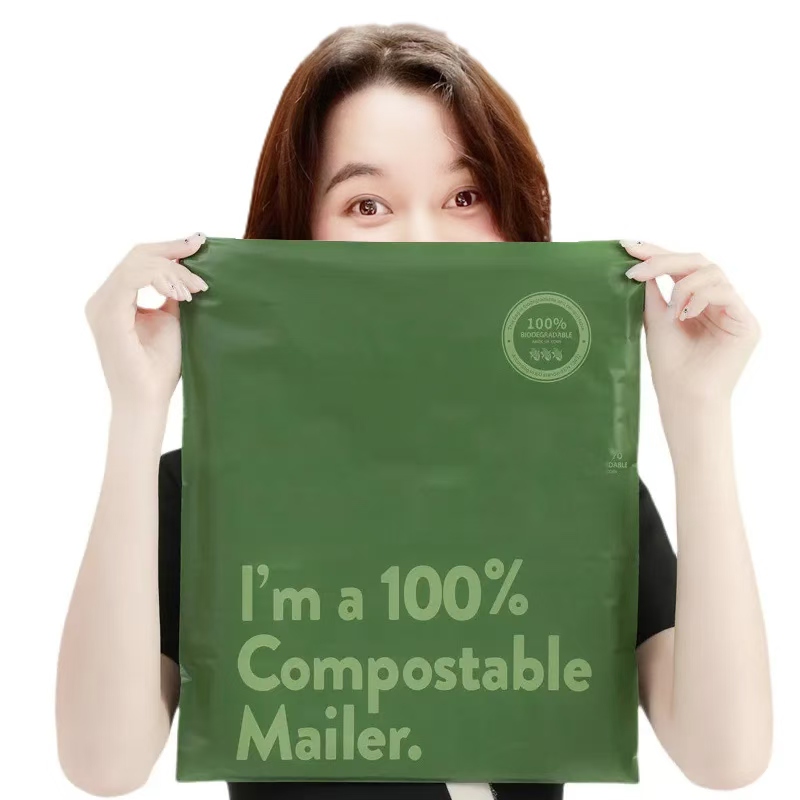
| Compostable Eco Mailer | 2.35 - 2.75 Mil (60 - 70 μm) | Up to 3.0 kg | Green logistics, sustainable retail fashion | High elasticity & tensile strength |
Frequently Asked Questions (FAQ)
Q1: Does a thicker mailing bag guarantee complete protection against sharp edges?
Increasing thickness improves puncture resistance, but sharp corners on hard boxes can still cut high-gauge film under impact. For sharp-edged goods, double-walled boxes or internal bubble wrap must be combined with a minimum 2.75 mil outer mailing bag.
Q2: How does ambient temperature during transit affect tear strength?
Sub-zero temperatures increase polymer rigidity, making standard plastic films brittle and prone to cracking under strain. Formulations with blended linear low-density polyethylene (LLDPE) or specialized elastomeric additives maintain flexibility and tear resistance down to -20°C.
Q3: Are compostable mailers as tear-resistant as conventional polyethylene mailers?
Certified compostable mailers made from PBAT and PLA achieve similar tensile strength and elongation metrics to standard LDPE when manufactured at slightly higher gauges (typically 2.35 mil to 2.75 mil).
Final Conclusion & Recommendations
Selecting the correct mailing bag thickness requires assessing product weight, edge sharpness, and transport length. Standard apparel items perform well in 2.0 to 2.5 mil bags, while heavy retail items require 2.75 mil or higher structures to eliminate tearing. Suppliers operating via OEM & ODM models support custom thickness calibration, offering bulk production runs with a minimum order quantity of 10,000 pieces and lead times of 10-15 days under FOB, EXW, DDP, or CIF shipping terms. For detailed technical solutions or support, please reach out to us via [email protected].
About Us
Zhejiang Chuancheng Packaging Products Co., Ltd (CCPACK) was established in 2001 and operates a 34,000 square meter manufacturing facility staffed by 186 employees. The company maintains an integrated production system covering film blowing, printing, compounding, and bag cutting, generating a monthly production capacity of 180 million bags. Products meet global compliance standards including ISO 9001, BSCI, FSC CoC, and EU REACH certifications, delivering packaging solutions to international retail and logistics clients worldwide.

Lastest
-
How much does the unit cost of a custom mailing bag drop if I increase my order from 5k to 20k units?
2026-08-10 -
What thickness of poly mailer should I choose to prevent tearing during international shipping?
2026-08-10 -
How long does it typically take to ship a bulk order of frosted zipper bags from China to European ports via sea freight?
2026-08-10 -
What thickness of poly mailer do I need to safely ship heavy hoodies without them tearing in transit?
2026-08-10 -
What is the standard production lead time for a bulk order of custom mailing bags?
2026-08-10
SUBSCRIBE
INQUIRY