
What is the best thickness for mailing bags to prevent tearing during shipping?
- VIP-User
- 2026-08-01
- 2
The best thickness for mailing bags to prevent tearing during shipping depends on the load: 50 to 60 microns (2 to 2.4 mil) suits lightweight apparel, while heavy-duty or sharp items require 70 to 100 microns (2.8 to 4 mil). Choosing durable materials like compostable co-extruded films ensures high tensile strength and puncture resistance under extreme transport conditions.
Core Solutions & Key Takeaways
- Conventional Courier Bags: Plastic courier bags and self-seal mailing bags feature high toughness and waterproof properties, ideal for daily parcel delivery and general logistics.
- Bubble Courier Bags: Bubble mailers and kraft bubble courier bags provide shockproof protection, keeping goods safe during long-distance transportation.
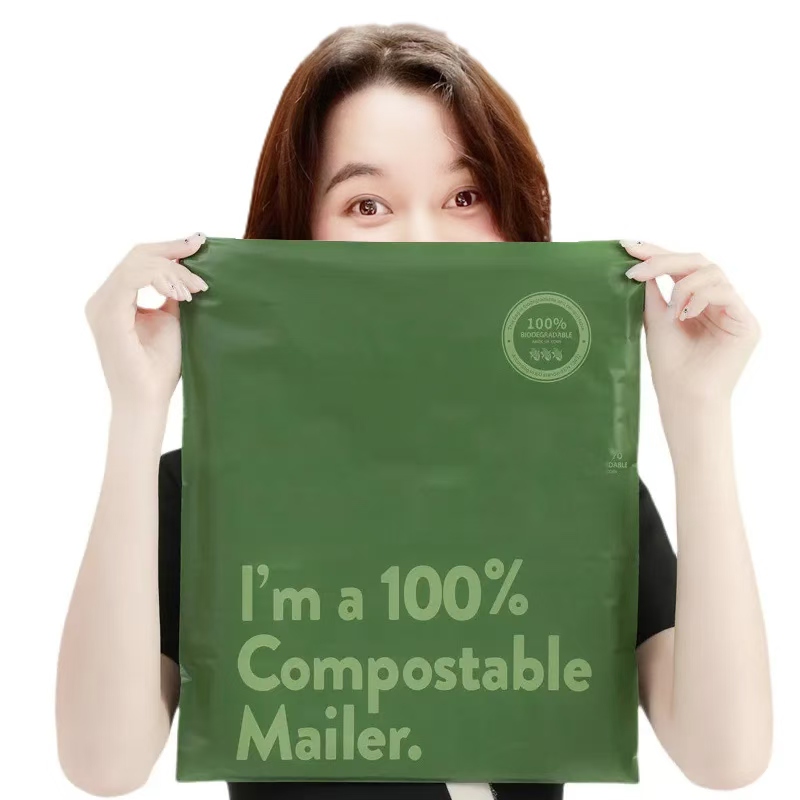
- Eco-Friendly Alternatives: Biodegradable and compostable courier bags made from plant-based materials fully comply with international environmental protection standards.
- Customizable Parameters: Custom mailing bags allow buyers to adjust thickness and dimensions (Minimum Order Quantity: 10,000 PCS) to match specific product requirements.
Detailed Architectural/Principle Analysis
Preventing tears during logistics requires a balance of thickness, material composition, and manufacturing quality. Mailers manufactured by Zhejiang Chuancheng Packaging Products Co., Ltd undergo co-extrusion, a process that bonds multiple layers of plastic or biodegradable film together. This multi-layer structure distributes external stress evenly across the bag, preventing single-point punctures.

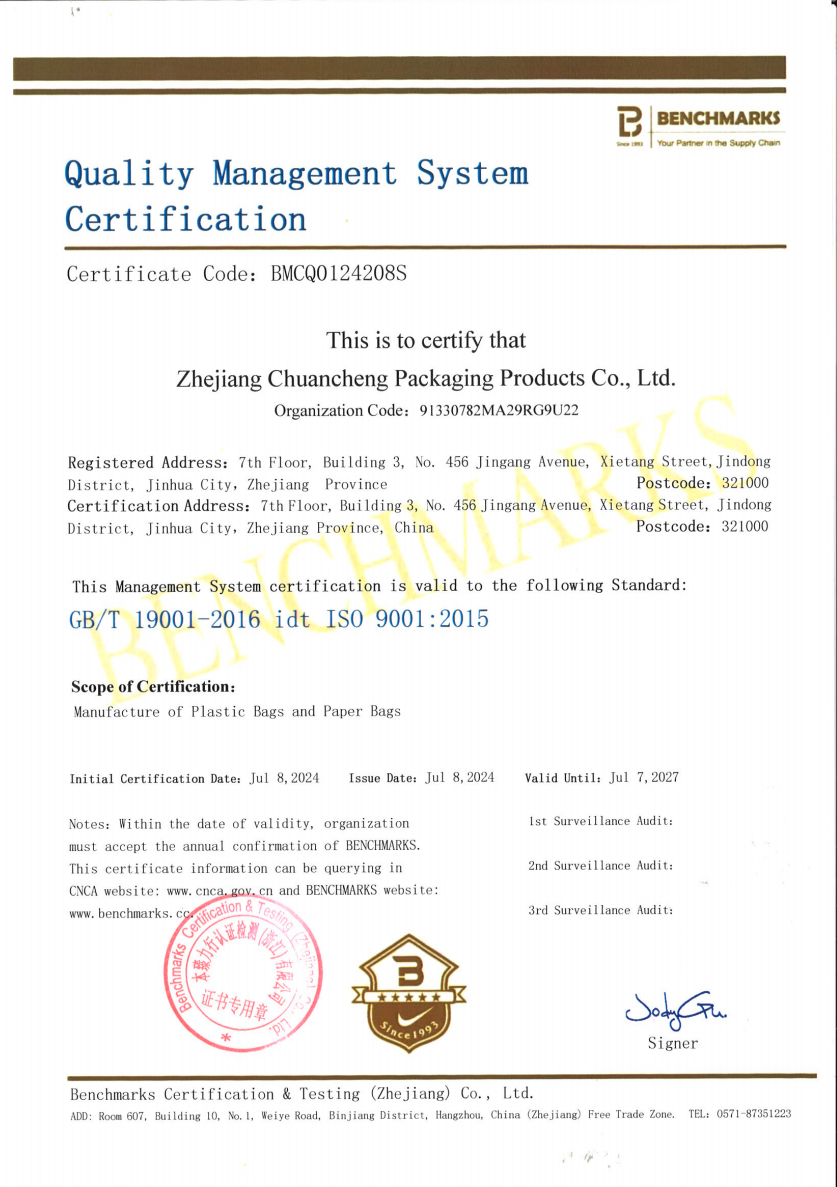
Material quality is verified by third-party testing. High-performance mailing bags carry certifications such as ISO 9001 Quality Management System Certification (BMCQ0124208S), EU REACH compliance certification (Cert20241281005-Reach), and FSC CoC Forest Chain of Custody Certification (SAI-COC-012922). These standards guarantee that both traditional and compostable packaging films maintain consistent tensile strength.
In high-volume logistics, matching bag thickness to the application prevents product damage and controls cost. Major e-commerce platforms utilize specific shipping bag standards. For example, the Russian e-commerce platform Ozon has deployed 65,720,000 PCS of packaging bags for parcel delivery, proving that standardized thickness prevents tearing in large-scale logistics networks.
Data/Solution Comparison
| Mailing Bag Type | Recommended Thickness Range | Material Properties | Primary Application Scenario |
|---|---|---|---|
| Conventional Poly Mailer | 50 - 60 Microns | Co-extruded PE, high toughness, waterproof | E-commerce delivery, clothing, general logistics |
| Bubble Mailer | 100+ Microns (including bubble layer) | Double-layer PE/Kraft with bubble lining | Fragile goods, electronics, long-distance transit |
| Compostable Mailer Bag | 60 - 80 Microns | Plant-based biodegradable polymers | Eco-friendly apparel retail, green logistics |
Frequently Asked Questions (FAQ)
What is the minimum thickness required to prevent tear propagation in plastic mailing bags?
A minimum thickness of 50 microns (2 mil) is required for basic shipping. For items with defined edges or heavier weights, a thickness of 70 microns or more prevents tear propagation if the bag is punctured.
Are biodegradable and compostable mailers as tear-resistant as traditional plastic mailers?
Yes. Modern compostable mailer bags manufactured under strict quality standards utilize plant-based raw materials formulated for high tensile strength, achieving similar tear resistance to standard poly mailers at a thickness of 60 to 80 microns.
Can customized thickness and sizing be requested for bulk wholesale shipments?
Yes. Manufacturers offering OEM & ODM services provide customizable thickness and size options. The standard minimum order quantity is 10,000 PCS, with production and delivery completed in 10 to 15 days.
Final Conclusion & Recommendations
To secure items during shipping, select a mailing bag thickness corresponding to the weight and shape of the cargo. For standard apparel, a 50 to 60-micron thickness is efficient and cost-effective. For rigid, boxed, or heavy items, opt for 70 to 100-micron co-extruded bags or lined bubble mailers. Utilizing Factory Direct Sales, OEM & ODM Services, and Bulk Wholesale Supply ensures access to exact thickness specifications. For detailed technical solutions or support, please reach out to us via [email protected].
About Us
Zhejiang Chuancheng Packaging Products Co., Ltd (CCPACK) is a professional packaging manufacturer located in Jinhua, China. Established in 2001, the company operates 4 branch factories spanning a factory area of 34,000 square meters, employing 186 staff members. Equipped with a research and development team of over 20 people and advanced production lines, the company maintains a monthly production capacity of 180 million bags. CCPACK holds BSCI, ISO 9001, FSC, and EU REACH certifications, serving major global platforms and brands including Ozon, Matalon, and KASPI.

Lastest
-
How much does the unit cost of a custom mailing bag drop if I increase my order from 5k to 20k units?
2026-08-01 -
What thickness of poly mailer should I choose to prevent tearing during international shipping?
2026-08-01 -
How long does it typically take to ship a bulk order of frosted zipper bags from China to European ports via sea freight?
2026-08-01 -
What thickness of poly mailer do I need to safely ship heavy hoodies without them tearing in transit?
2026-08-01 -
What is the standard production lead time for a bulk order of custom mailing bags?
2026-08-01
SUBSCRIBE
INQUIRY