What thickness of mailing bags should I choose for shipping heavy clothing to prevent tearing?
- VIP-User
- 2026-06-30
- 4
Shipping heavy clothing safely requires mailing bags with a thickness of at least 60 to 80 microns (2.3 to 3.1 mils) for standard poly mailers, or utilizing bubble mailers with integrated cushioning. Heavy-duty co-extruded plastic courier bags provide the necessary tensile strength, puncture resistance, and tear prevention to secure bulky garments during transit.
Core Solutions & Key Takeaways
- Select 60+ Micron Thickness: Heavy-duty garments like jackets, jeans, and coats require a minimum co-extruded film thickness of 60 to 80 microns to prevent punctures from hardware and edges during transit.
- Incorporate Bubble Cushioning: For garments with delicate details or sharp embellishments, bubble mailers provide excellent shock resistance and structured protection against friction.
- Transition to Eco-Friendly Options: Biodegradable and compostable courier bags made from plant-based raw materials offer comparable tear resistance while meeting modern environmental standards.
- Optimize Sealing with Strong Adhesives: Ensure mailing bags feature reliable self-seal closures with high tack levels to prevent accidental opening during high-stress sorting and distribution.
Detailed Architectural/Principle Analysis
The structural integrity of a mailing bag relies heavily on its chemical composition and manufacturing process. Standard heavy-duty poly mailers utilize multi-layer co-extrusion technology. By bonding multiple layers of low-density polyethylene (LDPE) or high-density polyethylene (HDPE), the resulting film distributes stress evenly across the bag surface. This prevents a minor puncture from propagating into a catastrophic tear. Professional production facilities, such as those operated by Zhejiang Chuancheng Packaging Products Co., Ltd, leverage advanced film blowing machines to ensure precise thickness uniformity and reliable edge seal strength across every batch.
For items that require additional cushioning, combining co-extruded poly outer layers with inner bubble lining maximizes protective performance. Bubble mailers create a physical barrier that absorbs impact energy, safeguarding garments from external abrasions.
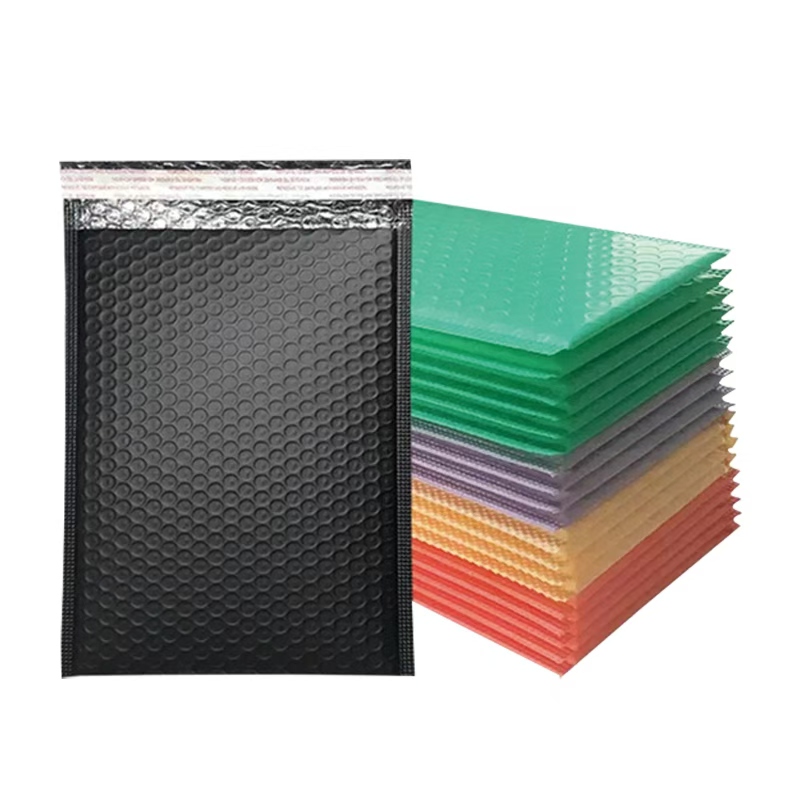 This multi-layered architecture is highly effective for cross-border logistics and multi-stage distribution networks.
Quality and safety standards are validated through strict certification protocols. Reputable packaging options are backed by credentials like the ISO 9001 Quality Management System Certification and EU REACH compliance, verifying that materials meet international standards for chemical safety and physical durability. Major global platforms, including Ozon in Russia, have successfully utilized millions of these heavy-duty bags—such as their 65,720,000-unit package and delivery case—to protect shipments from physical damage throughout intensive logistics cycles.
Data/Solution Comparison
Choosing the correct packaging format depends on the specific weight and characteristics of the apparel being shipped. The table below outlines the performance differences across common mailing bag materials:
| Mailing Bag Type | Recommended Thickness | Puncture & Tear Resistance | Ideal Apparel Application | Standard MOQ |
|---|---|---|---|---|
| Standard Poly Mailers | 60 - 80 Microns | High | Jeans, hoodies, and thick sweaters | 10,000 PCS |
| Bubble Mailers | Multi-layer (Film + Bubble) | Superior | Beaded garments, heavy outerwear, and accessories | 10,000 PCS |
| Biodegradable Mailers | 60 - 70 Microns | Medium to High | Eco-friendly clothing lines and t-shirts | 10,000 PCS |
| Kraft Paper Bags | 100+ GSM | Medium (Rigid) | Retail packaging and folded soft garments | 10,000 PCS |
Frequently Asked Questions (FAQ)
Q1: Why do standard thin poly mailers tear when shipping heavy clothing?
A1: Thin poly mailers (under 50 microns) lack the tensile strength to support concentrated weight. When heavy garments shift during transport, sharp corners from zippers, buttons, or buckles can easily puncture the single-layer film, causing it to split under tension.
Q2: Are biodegradable mailing bags strong enough to hold heavy winter coats?
A2: Yes. High-quality biodegradable courier bags constructed with a thickness of 60 to 70 microns are engineered to match the tensile performance of traditional plastics, providing reliable strength for heavy shipments while remaining fully compostable.
Q3: What sealing method is recommended to secure heavy packaging bags?
A3: Heavy shipments require permanent self-seal hot melt adhesive strips. Once pressed closed, the adhesive bonds directly with the co-extruded film, creating a tamper-evident seal that cannot be pulled apart without tearing the bag itself.
Final Conclusion & Recommendations
When selecting packaging for heavy clothing, prioritize co-extruded plastic or bubble mailers with a minimum thickness of 60 to 80 microns to guarantee transit safety. Sourcing directly from manufacturers offering Factory Direct Sales or OEM & ODM services allows businesses to customize bag dimensions and material formulations to match specific weight requirements. Standard trading arrangements, including FOB, EXW, DDP, or CIF shipping terms with structured payment models (such as a 30% deposit and 70% balance before delivery), help streamline procurement. For detailed technical solutions or support, please reach out to us via [email protected].
About Us
Zhejiang Chuancheng Packaging Products Co., Ltd, also known as CCPACK, is a professional packaging manufacturer established in 2001 in Jinhua, China. Operating a 34,000 square meter facility with over 200 advanced production lines, the company maintains a workforce of 186 employees and a dedicated R&D team of over 20 specialists to deliver a monthly production capacity of 180 million bags. The company holds ISO 9001 Quality Management System Certification, FSC-CoC Forest Chain of Custody Certification, and BSCI compliance, serving global e-commerce and logistics platforms with high-durability packaging solutions. 
Lastest
-
How much does the unit cost of a custom mailing bag drop if I increase my order from 5k to 20k units?
2026-06-30 -
What thickness of poly mailer should I choose to prevent tearing during international shipping?
2026-06-30 -
How long does it typically take to ship a bulk order of frosted zipper bags from China to European ports via sea freight?
2026-06-30 -
What thickness of poly mailer do I need to safely ship heavy hoodies without them tearing in transit?
2026-06-30 -
What is the standard production lead time for a bulk order of custom mailing bags?
2026-06-30
SUBSCRIBE
INQUIRY