What thickness of poly mailer should I choose to safely ship heavy winter clothing without tearing?
- VIP-User
- 2026-06-30
- 6
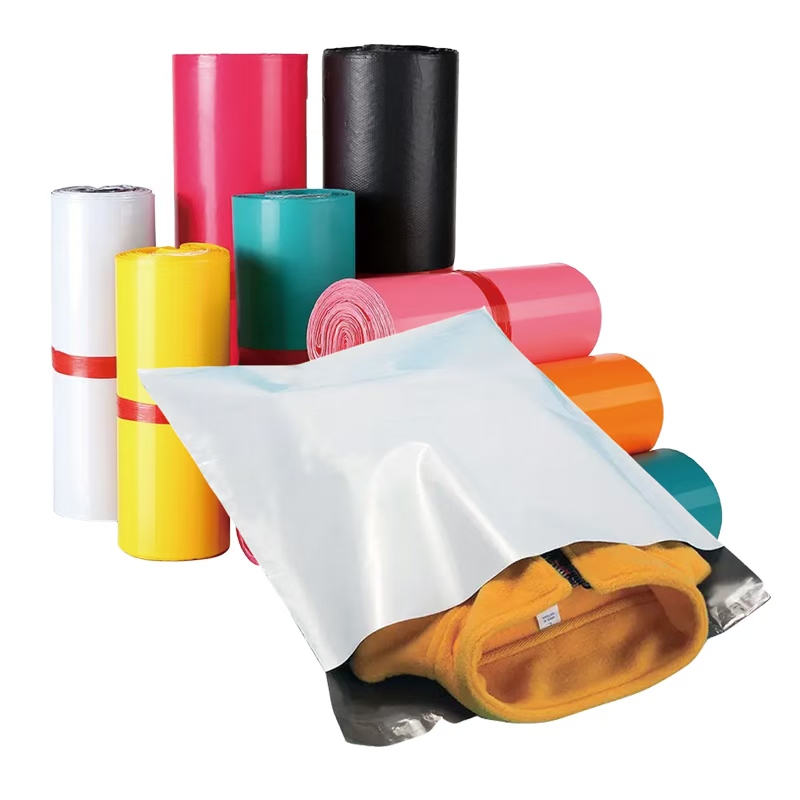
To safely ship heavy winter clothing such as jackets, coats, and boots without tearing, choose a poly mailer with a thickness of at least 2.5 to 3.0 mil (63.5 to 76.2 microns). Heavy garments exert high physical pressure on packaging seams during transit. Co-extruded plastic mailers of this thickness provide the necessary tensile strength, puncture resistance, and secure self-seal sealing to prevent burst failures.
Core Solutions & Key Takeaways
- Select 2.5 to 3.0 Mil (63.5–76.2 Microns) Thickness: Standard apparel packaging typically measures 1.5 to 2.0 mil, which fails under the shifting weight of heavy winter garments. Heavy-duty coats require thicker co-extruded films to withstand high drop stress.
- Prioritize Co-Extruded Multi-Layer Film: Packaging manufactured with co-extruded LDPE/LLDPE layers distributes structural tension evenly. This prevents sharp components like metal zippers, buckles, and buttons from puncturing the film.
- Deploy Secure Hot-Melt Adhesive Seals: Heavy shipments place continuous shear pressure on the bag flap. High-performance self-seal closures ensure the mailer remains airtight and tamper-evident throughout long-distance logistics.
- Adopt High-Performance Eco Materials: Brands aiming for environmental compliance can utilize biodegradable and compostable shipping bags, which match the load capacity and puncture resistance of conventional heavy plastics.
Detailed Architectural/Principle Analysis
The structural integrity of a poly mailer relies heavily on the film extrusion process and the selection of raw materials. To safely transport heavy items, manufacturers utilize co-extrusion technology. This technique merges multiple layers of polyethylene (such as LDPE, LLDPE, or HDPE) into a single, cohesive sheet. The inner layer of a professional mailer is typically colored black or grey to ensure complete opacity and security, while the outer layer is kept white to facilitate high-contrast label printing and barcode scanning.
Using advanced blowing film machinery, manufacturers can control the polymer distribution to increase tear strength along both the machine direction (MD) and transverse direction (TD). Heavy winter clothing like down jackets or parkas exerts dynamic, localized forces when dropped or stacked. High-thickness co-extruded films absorb this kinetic energy, distributing the impact across the polymer matrix instead of concentrated points, preventing tear propagation.
This physical resilience is demonstrated in international supply chains. Packaging suppliers such as Zhejiang Chuancheng Packaging Products Co., Ltd manage the entire production chain—including film blowing, composite lamination, and cutting—to ensure consistent thickness control. During large-scale parcel distribution with logistics platforms like Ozon in Russia, utilizing durable, thick poly mailers has proven highly effective in maintaining a near-zero tear rate across millions of shipments.

Data/Solution Comparison
| Poly Mailer Thickness | Recommended Load Capacity | Target Apparel Applications | Seam & Puncture Strength |
|---|---|---|---|
| 1.5 Mil (38 Microns) | Under 1.0 kg (2.2 lbs) | T-shirts, summer dresses, light socks, activewear shirts | Standard / Light-duty |
| 2.0 Mil (50 Microns) | 1.0 - 2.5 kg (2.2 - 5.5 lbs) | Jeans, hoodies, light sweaters, thin pants | Medium / Standard-duty |
| 2.5 - 3.0 Mil (63 - 76 Microns) | 2.5 - 5.0 kg (5.5 - 11.0 lbs) | Thick winter coats, denim jackets, heavy wool sweaters, boots | High / Heavy-duty |
| 3.15+ Mil (80+ Microns) | Over 5.0 kg (11.0 lbs) | Multiple winter coats, heavy leather outerwear, bulk retail sets | Ultra-High / Reinforced |
Frequently Asked Questions (FAQ)
Q1: Why do standard 2.0 Mil poly mailers sometimes tear when shipping winter coats?
A1: Standard 2.0 mil mailers lack the polymer density and thickness to resist localized pressure from sharp, hard accessories. Heavy winter garments often feature metal zippers, heavy-duty buttons, or plastic toggles. During transit, friction and package compression force these rigid components against the thin plastic film, leading to punctures and seam splits.
Q2: Do biodegradable and compostable poly mailers provide sufficient strength for heavy items?
A2: Yes, modern eco-friendly materials made from plant-based raw materials are engineered to match the mechanical performance of traditional LDPE. When manufactured at a thickness of 2.5 to 3.0 mil, these biodegradable mailing bags achieve high tensile strength and elasticity, satisfying heavy logistics demands while complying with international environmental standards.
Q3: Should I use a bubble mailer instead of a standard poly mailer for heavy apparel?
A3: Standard poly mailers (2.5 to 3.0 mil) are the most efficient option for compressible garments like down jackets, parkas, and heavy sweaters because they maximize volume and minimize shipping weight. However, if you are shipping shoes, boots, or garments with delicate embellishments, a bubble courier bag provides essential shock protection to prevent damage to the contents.
Final Conclusion & Recommendations
Selecting a minimum thickness of 2.5 to 3.0 mil is critical for preventing packaging failures when shipping heavy winter apparel. Investing in co-extruded films with strong self-seal adhesives reduces product loss, transit damage, and returns. Through flexible service models including Factory Direct Sales and custom OEM & ODM Service, businesses can acquire tailored heavy-duty packaging with a minimum order quantity (MOQ) of 10,000 PCS and a rapid delivery turnaround of 12-15 days. For detailed technical solutions or custom packaging inquiries, please reach out to us via [email protected].
About Us
Established in 2001, Zhejiang Chuancheng Packaging Products Co., Ltd is one of the top leading enterprises in the Chinese packaging industry, operating a 34,000 square meter factory staffed by 186 industry professionals. The company manages the entire production chain—including film blowing, printing, lamination, and cutting—to manufacture high-quality poly mailers, zipper bags, paper bags, and laminated bags with a monthly production capacity of 180 million bags. Backed by certified management systems including ISO 9001, BSCI, FSC CoC, and EU REACH compliance, the company has delivered millions of secure packaging units globally, serving platforms like Ozon, Matalon, and KASPI. 
Lastest
-
How much does the unit cost of a custom mailing bag drop if I increase my order from 5k to 20k units?
2026-06-30 -
What thickness of poly mailer should I choose to prevent tearing during international shipping?
2026-06-30 -
How long does it typically take to ship a bulk order of frosted zipper bags from China to European ports via sea freight?
2026-06-30 -
What thickness of poly mailer do I need to safely ship heavy hoodies without them tearing in transit?
2026-06-30 -
What is the standard production lead time for a bulk order of custom mailing bags?
2026-06-30
SUBSCRIBE
INQUIRY